Can you cut off a damaged Monstera leaf? Yes, you absolutely can and often should cut off damaged leaves from your Monstera plant. Removing damaged leaves, a crucial aspect of monstera leaf pruning, not only improves the plant’s appearance but also prevents potential problems like the spread of disease. This guide will walk you through everything you need to know about monstera leaf removal, including when and how to do it correctly to promote the health and vitality of your Monstera.
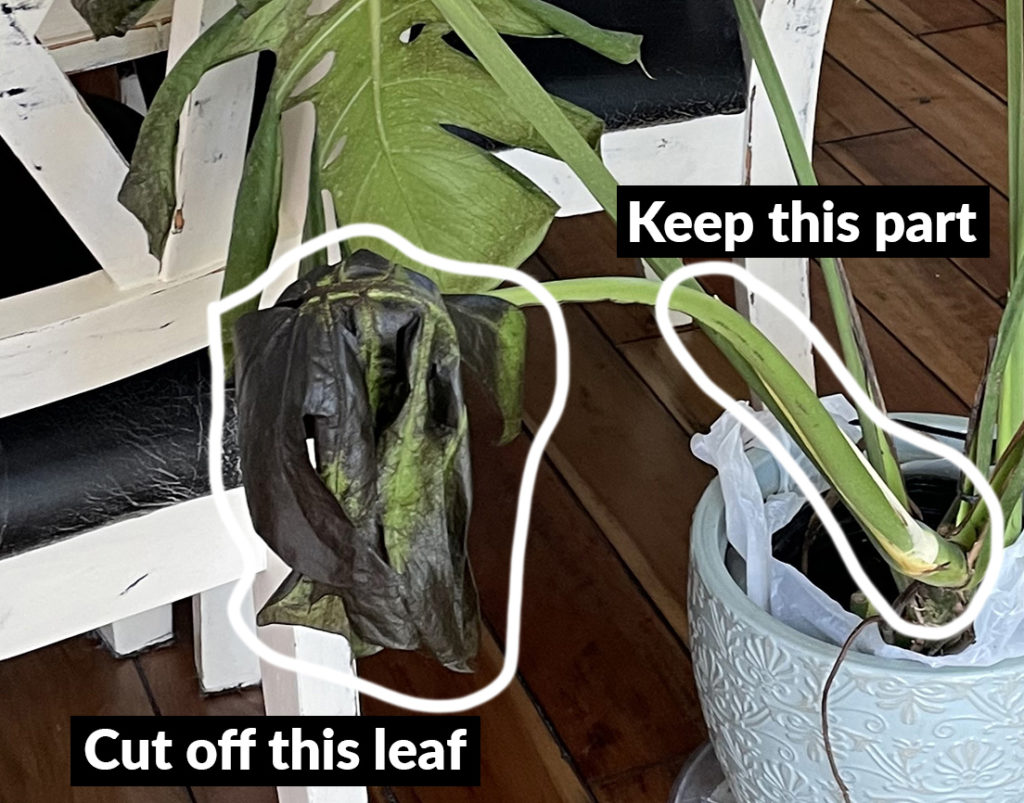
Image Source: www.houseplantjournal.com
Why Remove Damaged Leaves From Your Monstera?
Removing damaged monstera leaves isn’t just about aesthetics; it’s about the overall health of your plant. Here are some key reasons why you should consider trimming monstera plant leaves that show signs of damage:
- Preventing Disease Spread: Diseased monstera leaf can act as a breeding ground for pests and diseases. Removing affected leaves prevents these issues from spreading to healthy parts of the plant.
- Conserving Energy: Damaged leaves are not photosynthesizing efficiently. The plant wastes energy trying to repair them, energy that could be better used for new growth. Cutting brown monstera leaf redirects that energy.
- Improving Air Circulation: Removing overcrowded or damaged leaves improves air circulation around the plant, reducing the risk of fungal infections.
- Enhancing Appearance: Let’s be honest, a Monstera with vibrant, healthy leaves is much more appealing than one with damaged leaf monstera. Monstera leaf care contributes to a nicer looking plant.
- Encouraging New Growth: Removing old or damaged leaves can stimulate the plant to produce new leaves and maintain a healthy growth pattern.
Identifying Damaged Monstera Leaves
Before you start monstera leaf pruning, it’s crucial to correctly identify which leaves need to be removed. Here are some common signs of damage to look for:
- Brown Spots: Cutting brown monstera leaf might be needed. Brown spots can be caused by overwatering, underwatering, fungal infections, or sunburn.
- Yellowing Leaves: Yellowing monstera leaf removal is often required when leaves are affected by overwatering, nutrient deficiencies, or pests.
- Tears and Rips: While some tears are normal for mature Monsteras, excessive tearing can indicate physical damage or pest infestations.
- Wilting: Wilting leaves can be a sign of underwatering, root rot, or extreme temperature fluctuations.
- Pest Infestations: Look for signs of pests like spider mites, mealybugs, or thrips on the leaves.
- Black Spots: Black spots can indicate bacterial infections, often caused by excessive moisture or poor air circulation.
Tools You’ll Need
To perform monstera leaf pruning safely and effectively, gather the following tools:
- Sharp, Clean Pruning Shears or Scissors: A sharp tool will make clean cuts, minimizing the risk of infection.
- Rubbing Alcohol or Disinfectant: To sterilize your tools before and after use.
- Gloves (Optional): To protect your hands from sap and potential irritants.
- Trash Can or Bag: For disposing of the removed leaves.
Step-by-Step Guide to Cutting Off a Damaged Monstera Leaf
Follow these steps for monstera leaf removal:
-
Sterilize Your Tools: Before you begin, clean your pruning shears or scissors with rubbing alcohol or a disinfectant. This prevents the spread of bacteria or fungus to your plant.
-
Identify the Leaf to Remove: Carefully examine your Monstera and identify the leaf or leaves that need to be removed based on the signs of damage mentioned earlier.
-
Locate the Cutting Point: Trace the stem of the damaged leaf back to where it connects to the main stem of the Monstera. You want to make the cut as close to the main stem as possible without damaging it. Cutting too far away can leave a stub that is prone to rot.
-
Make the Cut: Using your sterilized pruning shears or scissors, make a clean, angled cut at the base of the leaf stem. Avoid tearing or crushing the stem. Aim for a smooth cut.
-
Dispose of the Leaf: Place the removed leaf in a trash can or bag. Do not compost diseased monstera leaf as this could spread the problem.
-
Monitor Your Plant: After removing the damaged leaf, keep an eye on your Monstera for any signs of further issues. Adjust your watering, lighting, or humidity as needed to maintain optimal growing conditions. Monstera leaf care involves close observation.
Dealing With Specific Types of Leaf Damage
Cutting Brown Monstera Leaf
Brown spots are a common issue. Here’s how to address them:
-
Small Brown Spots: If the brown spots are small and localized, you may be able to simply trim off the affected portion of the leaf, leaving the healthy part intact.
-
Large Brown Spots: If the brown spots cover a significant portion of the leaf, it’s best to remove the entire leaf.
-
Brown Edges: Brown edges can be caused by dry air or inconsistent watering. Increase humidity and ensure consistent watering habits. If the edges continue to brown, consider removing the leaf.
Yellowing Monstera Leaf Removal
Yellow leaves can indicate various problems:
-
Overwatering: Overwatering is a common cause of yellowing leaves. Allow the soil to dry out between waterings.
-
Nutrient Deficiency: Yellowing can also indicate a nutrient deficiency. Fertilize your Monstera with a balanced liquid fertilizer during the growing season (spring and summer).
-
Pests: Check the leaves for signs of pests. Treat any infestations promptly.
-
Old Age: Sometimes, older leaves naturally yellow and die off. This is a normal part of the plant’s life cycle.
If a leaf is significantly yellow, remove it.
Addressing Tears and Rips
-
Minor Tears: Minor tears and rips are normal, especially in mature Monsteras. You don’t need to remove leaves with small tears unless they are unsightly.
-
Excessive Tearing: Excessive tearing can be a sign of physical damage or pest infestations. Address the underlying cause and remove severely damaged leaves.
Handling Pest Infestations
-
Identify the Pest: Determine what type of pest is affecting your Monstera.
-
Isolate the Plant: If possible, isolate the infested plant to prevent the pests from spreading to other plants.
-
Treat the Infestation: Treat the infestation with insecticidal soap, neem oil, or another appropriate pesticide.
-
Remove Heavily Infested Leaves: Remove any leaves that are heavily infested or severely damaged by pests.
Monstera Propagation From Leaf Cutting: Is it Possible?
While it’s tempting to try and propagate a new plant from a cut Monstera leaf, it’s important to know that a leaf cutting alone will not produce a new plant. Monstera propagation requires a node – the point on the stem where a leaf emerges. Without a node, the leaf might root, but it won’t grow into a new plant.
- Node Requirement: A node is essential for new growth. This is where the plant’s growth hormones are concentrated.
- Stem Cuttings: The most effective way to propagate a Monstera is through stem cuttings that include at least one node. You can also propagate through air layering.
Encouraging New Growth After Pruning
After trimming monstera plant leaves, you can take several steps to encourage new growth:
- Provide Adequate Light: Monsteras thrive in bright, indirect light. Make sure your plant is getting enough light.
- Water Properly: Water your Monstera when the top inch of soil feels dry. Avoid overwatering.
- Fertilize Regularly: Feed your Monstera with a balanced liquid fertilizer every 4-6 weeks during the growing season.
- Maintain Humidity: Monsteras appreciate high humidity. Increase humidity by misting the leaves regularly, using a humidifier, or placing the plant on a pebble tray filled with water.
- Provide Support: As your Monstera grows, it may need support to climb. Use a moss pole or trellis to provide support.
- Repot if Necessary: If your Monstera is root-bound, repot it into a larger container.
Table: Troubleshooting Common Monstera Leaf Problems
| Problem | Possible Cause(s) | Solution |
|---|---|---|
| Brown Spots | Overwatering, underwatering, fungal infection, sunburn | Adjust watering, apply fungicide, move to a location with indirect light |
| Yellowing Leaves | Overwatering, nutrient deficiency, pests, old age | Adjust watering, fertilize, treat pests, remove old leaves |
| Wilting Leaves | Underwatering, root rot, extreme temperature fluctuations | Adjust watering, improve drainage, stabilize temperature |
| Pest Infestations | Spider mites, mealybugs, thrips | Isolate plant, treat with insecticidal soap or neem oil, remove infested leaves |
| Black Spots | Bacterial infection | Improve air circulation, reduce humidity, remove affected leaves, apply fungicide if necessary |
Best Way To Cut Monstera Leaf: Summarizing the Method
In short, best way to cut monstera leaf involves the following steps:
- Sterilize your cutting tools.
- Identify the damaged leaf.
- Locate the point where the leaf stem meets the main stem.
- Make a clean, angled cut as close to the main stem as possible.
- Dispose of the leaf.
Monstera Leaf Care: Key Considerations
Effective monstera leaf care goes beyond just removing damaged leaves. It also involves:
- Providing the right environment: Ensure your Monstera has the right light, humidity, and temperature.
- Watering correctly: Water when the top inch of soil is dry.
- Fertilizing regularly: Feed your plant during the growing season.
- Checking for pests: Regularly inspect your plant for signs of pests.
- Providing support: Give your Monstera something to climb on as it grows.
FAQ: Cutting Off Damaged Monstera Leaves
Q: Is it okay to cut brown tips off Monstera leaves?
A: Yes, you can trim brown tips. Use clean, sharp scissors to carefully cut away the brown portion, following the natural shape of the leaf.
Q: Will a cut Monstera leaf grow back?
A: No, a cut Monstera leaf will not grow back. However, removing a damaged leaf encourages the plant to focus its energy on new growth.
Q: How often should I trim my Monstera?
A: Trim your Monstera as needed, whenever you notice damaged, yellowing, or diseased leaves. There’s no set schedule, but regular inspection will help you stay on top of it.
Q: Can I save a completely yellow Monstera leaf?
A: Probably not. If a leaf is completely yellow, it’s likely beyond saving. Remove it to prevent potential problems and encourage new growth.
Q: What do I do if I accidentally cut off a healthy leaf?
A: Don’t worry! While you can’t reattach the leaf, you can try to propagate the stem if it includes a node. Otherwise, consider it a learning experience and focus on caring for the rest of the plant.
Nurturing your Monstera to lush, vibrant health for years to come is within reach by mastering these leaf pruning techniques and dedicating yourself to its overall care. Keep in mind that snipping away leaves is merely one piece of the puzzle; cultivating the ideal environment and proactively tackling any underlying concerns are just as crucial to its flourishing.

My name is Rob Young, and I’m the voice and passion behind gardenerhow.com. This website is my outlet to share my journey, expertise, and enthusiasm for sports. Whether you’re a seasoned enthusiast or just starting your athletic adventures, I aim to inspire, educate, and connect with people who share the same love for sports. Join me as we dive into techniques, tips, and stories that make the world of sports even more exciting!